
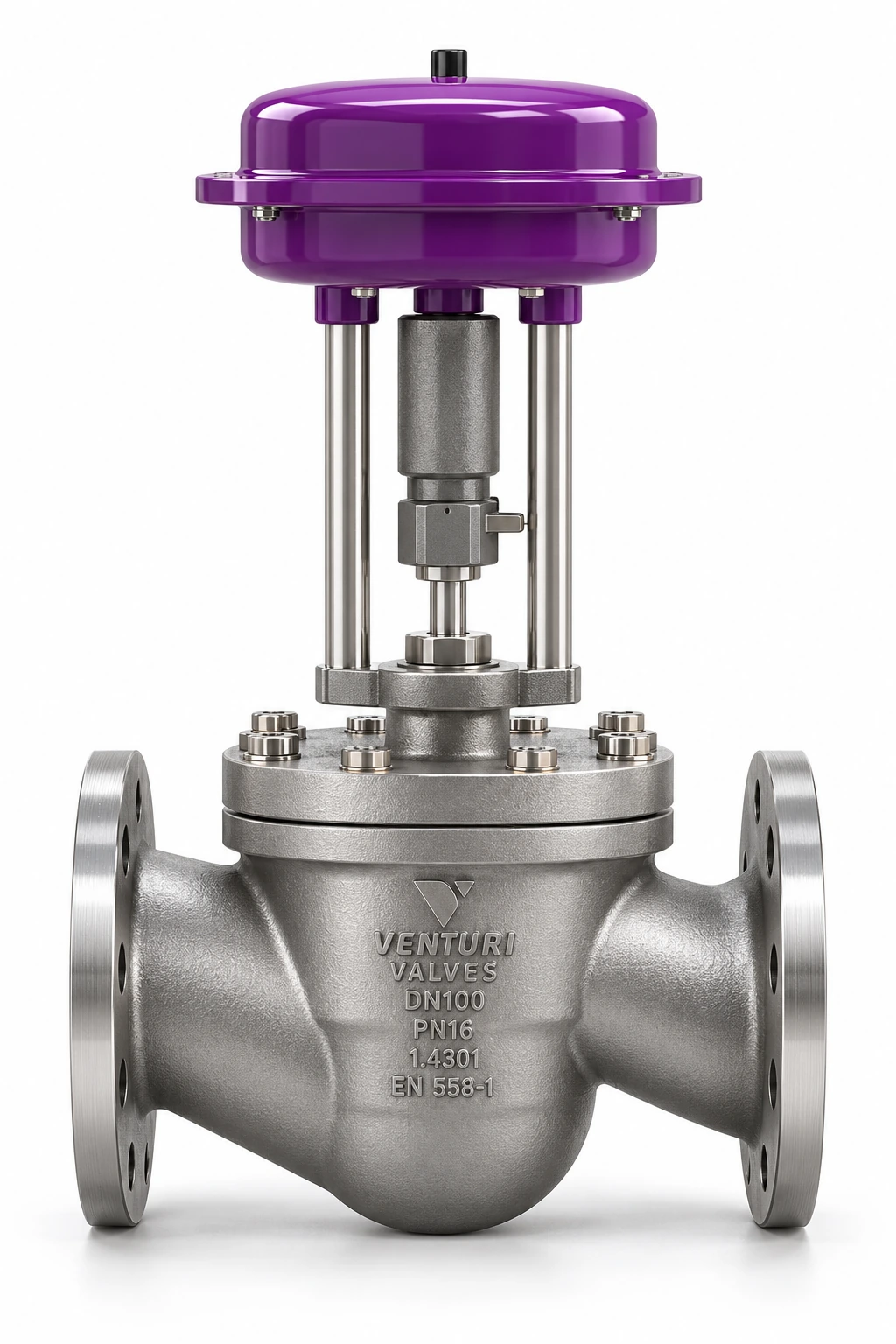
Start with operating conditions, not pipe size
A control valve adjusts flow to a changing demand. Sizing needs minimum, normal and maximum flow plus inlet and outlet pressures. Selecting an oversized valve solely from the pipe diameter can make small movements produce excessive flow changes at low load. The selected range must cover the actual operating envelope.
Distinguish Kvs from the operating point
Kvs is the reference flow coefficient at full opening. Required Kv and valve travel change with load. Simple water-sizing relationships cannot be transferred directly to steam, gas or cavitating flow. Check characteristic, critical pressure ratio, velocity and noise using a manufacturer calculation appropriate to the service.
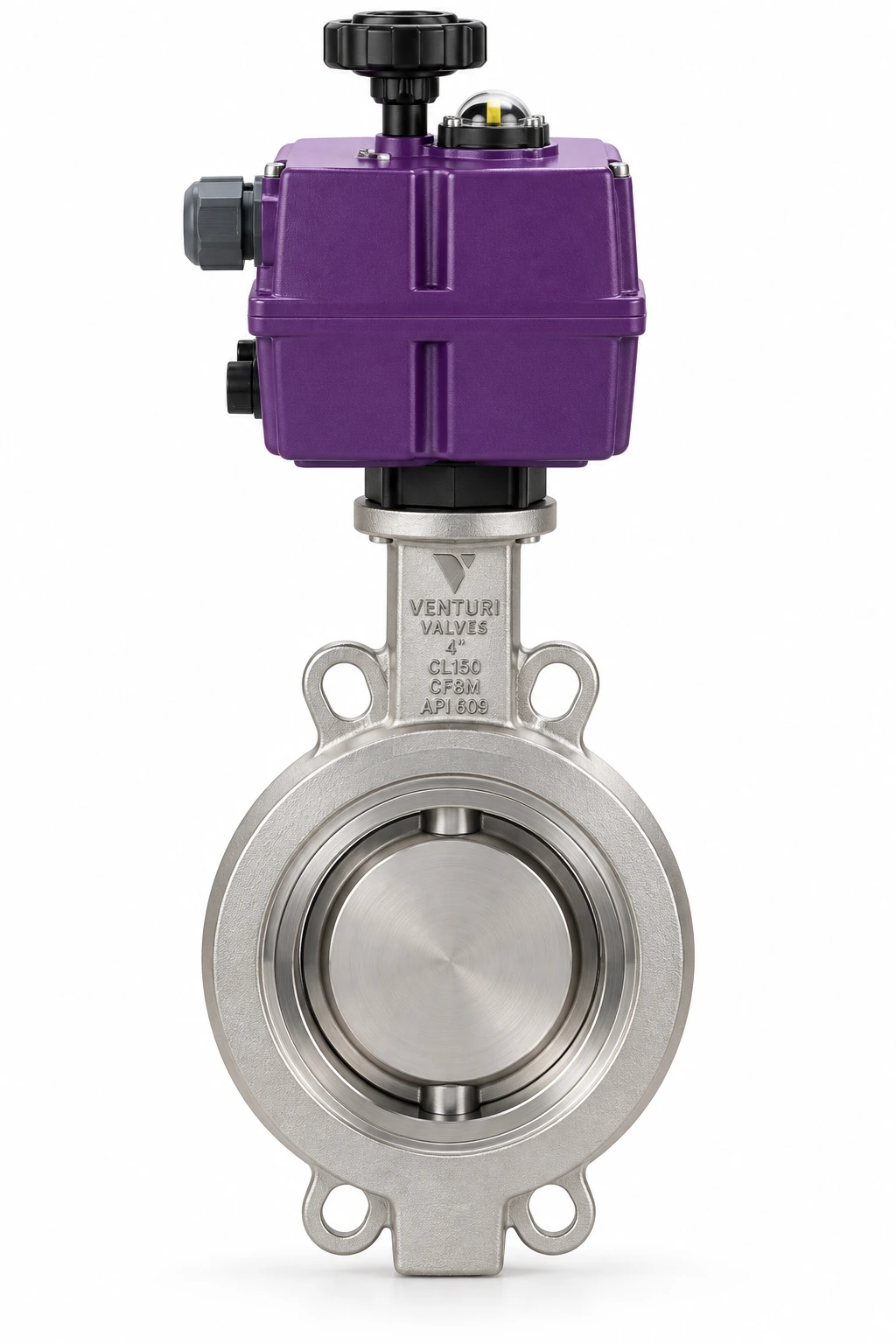
Evaluate the actuator with the process
Specify power or air supply, control signal, travel time and required shut-off force for a pneumatic or electric actuator. Define the required failure position through the process risk assessment. Clarify positioner, position feedback and manual operation at the same time so valve and automation are matched.
Let’s select the right product.
Consider nominal size, pressure class, fluid, temperature, connection and actuation together. Refer to the technical catalogue for suitable materials and operating limits.